
The Ultimate Guide to HR Policies for Employers
HR policies are a fundamental part of any well-managed organisation. They provide clarity, consistency, and legal protection for both employers and employees, ensuring workplace expectations are clearly understood and fairly applied.
A well-structured set of HR policies also helps businesses reduce risk, support managers in decision-making, and demonstrate compliance with employment legislation.
What are HR policies?
HR policies are formal, written guidelines that set out how an organisation manages its employees. They establish a standardised framework for workplace behaviour, outline expectations for both employers and employees, and ensure that company practices comply with employment legislation.
Why are HR Policies Important?
HR policies play a vital role in supporting effective workforce management. They are important for several reasons:
- Consistency: They ensure employees are treated fairly and equally
- Compliance: They protect the business from legal disputes and ensure adherence to employment legislation
- Clarity: They provide employees with a clear benchmark for behaviour and outline their rights and benefits.
Without clear HR policies in place, businesses are more vulnerable to inconsistency, misunderstanding and potential legal claims.
Which HR policies are Mandatory?
Whilst not all HR policies are legally required in writing, there are certain policies and procedures employers must have in place depending on the size and nature of the business.
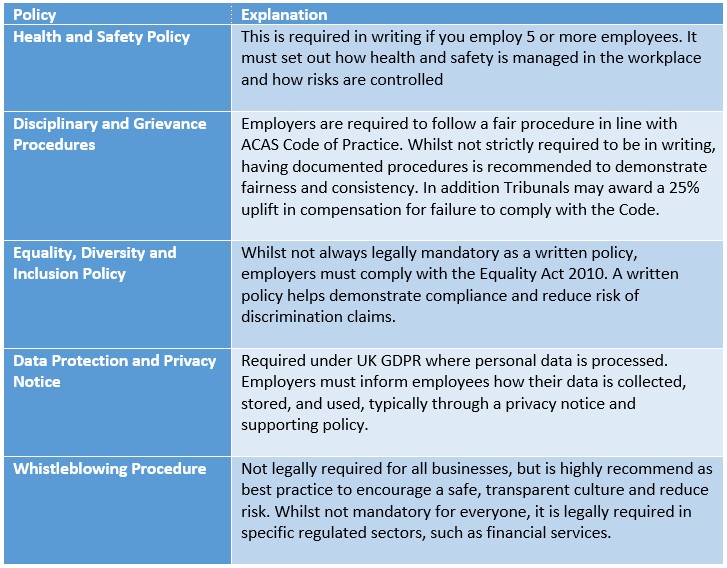
Even where policies are not legally required in written form, employers are still legally obliged to follow fair procedures and comply with employment legislation.
Which HR policies do we recommend?
In addition to mandatory requirements, there are several key HR policies that every business should consider implementing to reduce risk and support effective employee management.
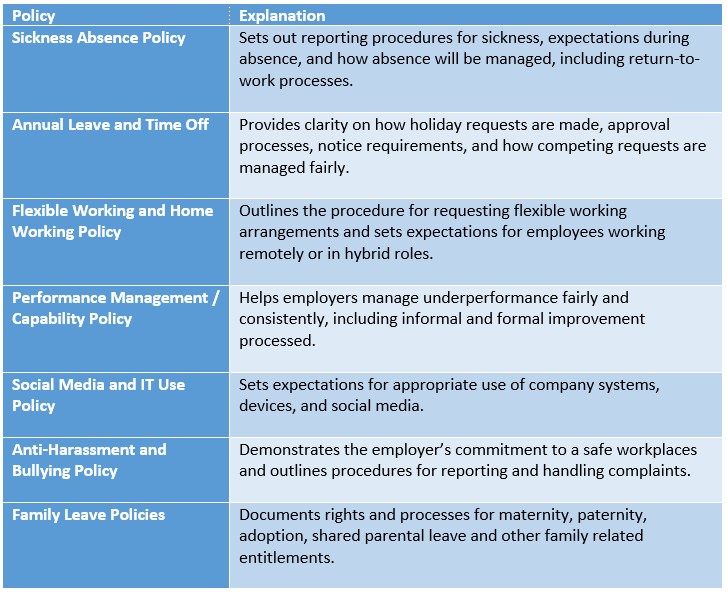
Having these policies in place helps ensure consistency across the business and provides managers with clear guidance when dealing with workplace matters.
What should an effective HR policy include?
The effectiveness of HR policies depends not only on having them in place, but also on how clearly they are written and communicated. Policies should be practical, accessible and free from unnecessary legal jargon.
A strong policy should include:
- A clear purpose and scope, including who the policy applies to
- Defined roles and responsibilities
- Step by step procedures where appropriate
- Clear timescales for action, for example, in disciplinary or grievance processes
- References to relevant legislation or related internal policies
- Consequences of non-compliance where appropriate
Policies should be consistent with one another and aligned with the organisations values and culture.
How often should HR policies be reviewed?
HR policies should not be “set and forget” documents. They should be reviewed regularly to ensure they remain compliant with current employment law and reflect changes in the business.
If there are important employment legislation changes, you should review your policies immediately to ensure that these reflect the current legal position.
If a policy is reviewed and updated, all staff should be made aware of any updates.
Need Help Drafting or Reviewing your HR Policies?
If you’re unsure whether your HR policies are up-to-date, legally compliant or what HR policies you have our HR and Employment Law experts at Alpha HR are happy to assist.
Alpha HR is an outsourced HR provider who are also a firm of solicitors and have many options you could benefit from providing you with a dedicated advisor and a unique “partnership approach” supporting your business HR needs.
For more information, or a no obligation quotation, please contact our Alpha team alpha@martinkaye.co.uk or 0845 450 1561